
Bear Essentials September 11: Full House
September 11, 2026
Turn back all ye who hate news of housing policy, housing projects and housing headaches! We’re going “Maximum Housing” in this week’s edition of Bear Essentials because there were simply too many interesting (and interestingly interconnected) stories to share. Below, you’ll find a requiem for the California condo, a groundbreaking 25 years in the making, a father and son who do the same job yet live in two distinctly different economies, and a million-dollar affordable apartment in the bucolic Marin paradise of Point Reyes. Plus, a podcast for our fellow housing-addled friends and an obligatory nod to the state’s weirdest builder of housing, Sarah Winchester.
THE LEAD: CONDO-LENCES, CALIFORNIA.
Last week we regaled you with the sad tale of AB 1903, the condo reform bill that cleared both houses of the Legislature without a single no vote and then expired at midnight anyway. Perhaps feeling a little dispirited, the L.A. Times went ahead and drafted a wan obituary for the erstwhile California condo market, strangled by rampant litigation.
The numbers are certainly grim. Between 2011 and 2021, multifamily condos comprised only 3% of all new housing built in the Golden State. In Canada, the figure was 38%. Condo construction in the Bay Area and Southern California has plummeted roughly 90% since its 2005 peak. Is it any surprise, then, that this dwindling inventory of entry-level homes has helped fuel the housing affordability crisis over roughly the same span? Condos typically sell for 15% to 30% less than their single-family counterparts, so that collapse represents a whole lot of first homes that never got built. “We’re just not building them,” said Assemblymember Buffy Wicks, the bill's author, in a quote that could double as the state motto.
Most of the blame belongs to a 2002 construction-defect law that, ironically, was supposed to cut down on lawsuits. (Then again, this being California, maybe we should just expect good intentions to boomerang.) Under current rules, condo owners can pursue defect claims for up to 10 years after construction. Builders of rental apartments get a four-year liability window. Guess which one developers prefer to build? The insurance market tells the rest of the story. Condo builders pay 3x–4x as much for coverage as they do on comparable apartments, which in Los Angeles works out to an extra $8,000 to $18,000 per unit, according to a 2025 report commissioned by the Terner Center and SPUR.
Trial attorneys and homeowner associations led the charge against AB 1903, arguing that the reform would leave buyers exposed to corner cutting and other shoddy work. Fair point, but maybe we’ve gone a little too far when the law protecting condo buyers succeeds in making sure there are almost no condos to buy in the first place? Wicks says she's confident backers can bring back something even stronger next session. Good. The condo was the bottom rung of California's ownership ladder, and we hacked it off 20 years ago.
🤫 Everything you should know
🏗️ - THE (VERY) LONG GAME — San Francisco Mayor Daniel Lurie and Speaker Emerita Nancy Pelosi grabbed ceremonial shovels Wednesday at Candlestick Point, where, in a minor miracle, the sun was out and the wind was not. (Where was that weather during the 40 years the Giants played at the ‘Stick?) The political glitterati were on-hand as FivePoint Holdings broke ground on the 270-acre redevelopment of the old stadium site, which will eventually hold 7,200 homes and 2.8 million square feet of office space. The plan has been in the works for more than 25 years.
For San Francisco’s Bayview neighborhood, which has watched promises about this land come and go for a generation, it was a big day. FivePoint finally untangled Candlestick from the neighboring Hunters Point Shipyard, where Navy contamination and a radiation-testing fraud scandal kept everything frozen for years.
Now for the part where we do some math. Roads and utilities will hit the landscape first, followed by roughly 700 homes expected by 2029. The commercial district is slated for the early-to-mid 2030s. Full build-out runs into the 2040s. Add it up and you get a housing project that will have taken about as long to finish as a human career. We'll happily take it, and we tip our hard hats to everyone who stuck with it. We'd also like the next one to take half as long (or less). — SF Chronicle
🚛 - SAME TRUCK, DIFFERENT CALIFORNIA — Salomon Olea has spent 30 years driving a commercial trash truck through San Diego's northern suburbs. On that paycheck he bought a house and raised a family. The house was partly for his son. When Angel was about five, his ball sailed over a fence at their rental and the property manager scolded him. Salomon decided the kid needed a yard of his own.
Angel is 30 now, with three children of his own, and he drives the same kind of truck on the same route, 12 hours a day, a few trucks ahead of his dad. The big difference is that Angel can barely cover rent. Wages in the trade have slipped while home prices have gone stratospheric. Heartbreakingly, Angel blames himself, as if he's failing at something his father made look easy.
He isn't failing; California simply stopped paying off that job with a home. A generation ago, a steady blue-collar paycheck could buy a starter home, and for plenty of families the starter home was a condo (see above). Take those homes off the market and even the people who do everything right end up renting indefinitely. — L.A. Times
🏡 - YES, BUT IT’S AN AFFORDABLE MILLION — West Marin is getting its biggest affordable housing project in decades. Please don't look at the receipt.
Tamalko Homes, a partnership between Eden Housing and the Community Land Trust Association of West Marin, is set to transform a tract of dilapidated Coast Guard housing near Point Reyes Station into 54 rental homes all for the low, low price of $55.4 million, or about $1 million per unit. Economist Jason Ward called the figure “astonishing,” which is economist for “Does anyone have a Tums?”
The developers’ explanations are legit. The buildings are old, the code upgrades are major, several structures have to be converted into apartments, and the site needs its own wastewater system. Those are heavy lifts! Financing also isn’t cheap these days, and when you tack on years of design work the bill climbs quickly. The project also skews toward bigger three- and four-bedroom homes, with 15 reserved for agricultural workers and others set aside for retirees. But still…$1M per unit? What are we even doing here?
The need is real. Half of West Marin renters occupy the county's very-low-income category, and a quarter of households spend more than half their income on rent. So, we're happy to see these homes getting built. The math still stings. Public housing dollars are finite, and at $1 million per door, every project houses fewer families than it should. We’ve got to figure out how to produce more, faster, cheaper. Full stop. (Oh, and if you think this is steep, check out Fast Five item #4, below.) — SF Chronicle
🎙️ 💬 🎧 - ON THE POD: UCLA HOUSING VOICE
Still hungry for housing policy? UCLA Housing Voice is the podcast serving up a wonky main course. Host Shane Phillips and UCLA scholars dissect one study per episode, a radical commitment to evidence. Start with Vicki Been puncturing supply-skeptic talking points in Episode 119, then revisit Measure ULA in Episode 110 with Jason “astonished” Ward. It’s audio catnip for YIMBYs. — UCLA Housing Voice
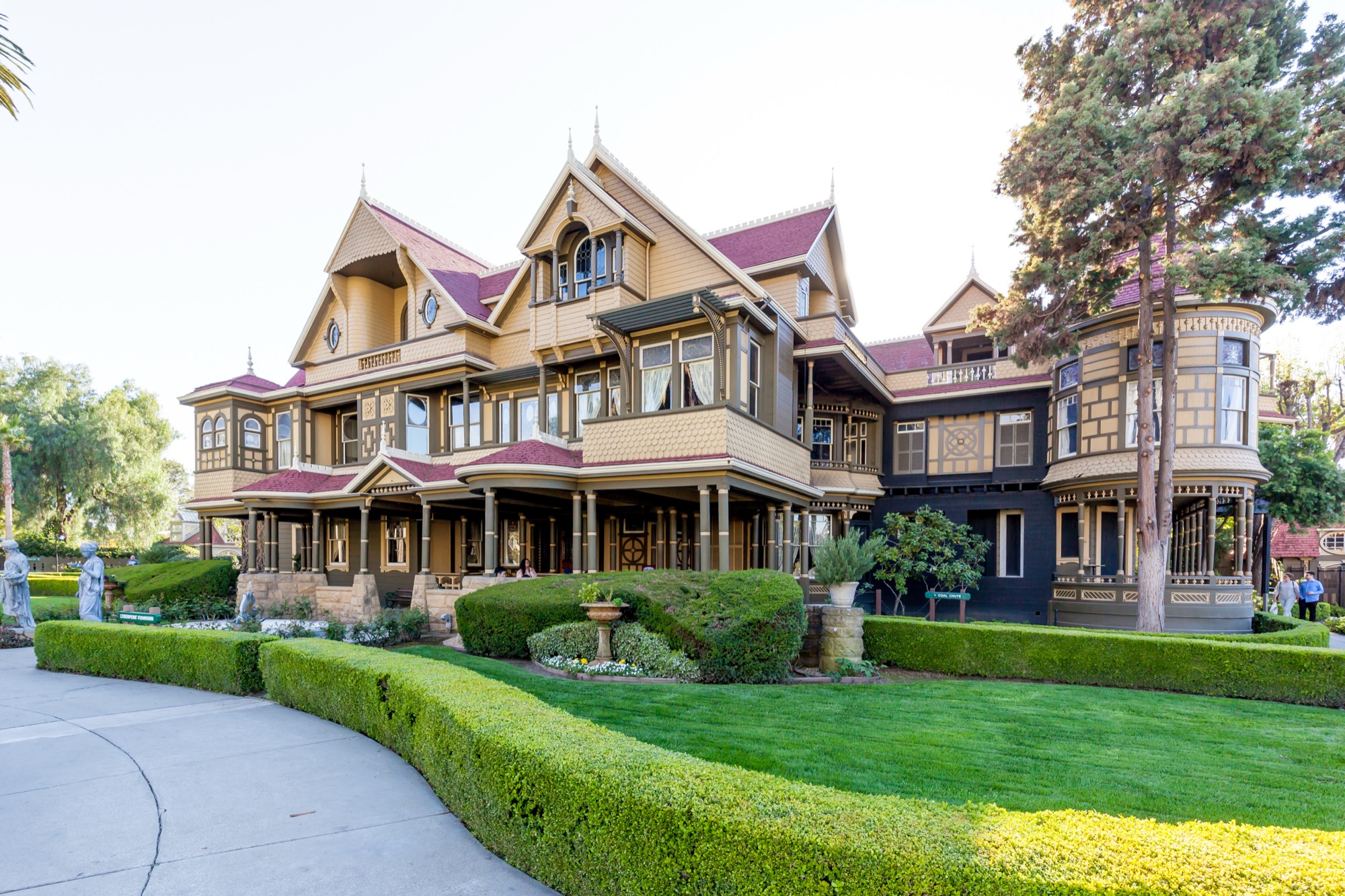
Candlestick needed 25 years just to break ground. Sarah Winchester had no problem getting started; she just didn’t know when to stop. From 1886 to 1922, she turned a San Jose farmhouse into a 160-room Victorian fever dream, complete with useless doors, staircases to nowhere, and a grab bag of architectural oddities that still baffles and creeps out visitors today. No environmental impact report was required. California was young then. — Winchester Mystery House
🏃♂️ 💨 ✋ FAST FIVE
1. 🚧 Brisbane's bill comes due. The state pulled Brisbane's housing plan certification in July after the city blew its deadline on the long-stalled Baylands. The tiny suburb is about to find out what life under the Builder's Remedy looks like. — SF Chronicle
2. 🐄 Can’t win for trying. California Forever’s attempt to short circuit infill NIMBYism by building a city and two massive employment engines in the middle of nowhere remains in neutral. Terner Center's Ben Metcalf notes that big California developments routinely take 20 years just to break ground (hi, Candlestick). — NY Times
3. 🗳️ Becerra’s nuanced housing pitch. Gubernatorial candidate Xavier Becerra is selling voters on more construction and fewer grand pledges, a modest-sounding approach in a state that set a goal of 2.5 million homes by 2031 and builds only about 100,000 to 120,000 a year. — Sacramento Bee
4. 🎖️ West Marin, meet the VA. Homeless veterans' housing planned for the West Los Angeles VA campus is now estimated at a record $1.25 million per unit, which makes Point Reyes look like a bargain. — L.A. Times
5. 🚆 Counting trains is hard, apparently. Two Realtor-affiliated housing groups are suing SANDAG, arguing its SB 79 map shielded the Oceanside and Solana Beach stations from denser housing by undercounting service, including placing Oceanside in the 48-to-71-trains-a-day tier even though more than 100 trains stop there daily. — Times of San Diego
