
Bear Essentials July 31st: Green, but Not That Green
July 31, 2026
We’re back from summer break, and boy do we have news for you! Californians told PPIC that they overwhelmingly want faster permitting, still love their climate laws, and won't pay another dollar for any of it. Contradictory? Sure. Also completely reasonable. Below: the number Sacramento should tape to its mirror, Candlestick's long-awaited second act, labor eating its own over the billionaire tax, the Bay Area's booming unemployment sector, and the heartwarming return of Paradise Elementary School.
But first, a word from our President and CEO in the SF Chronicle:
California is cutting trees to prevent wildfires. But it has nowhere to put them.
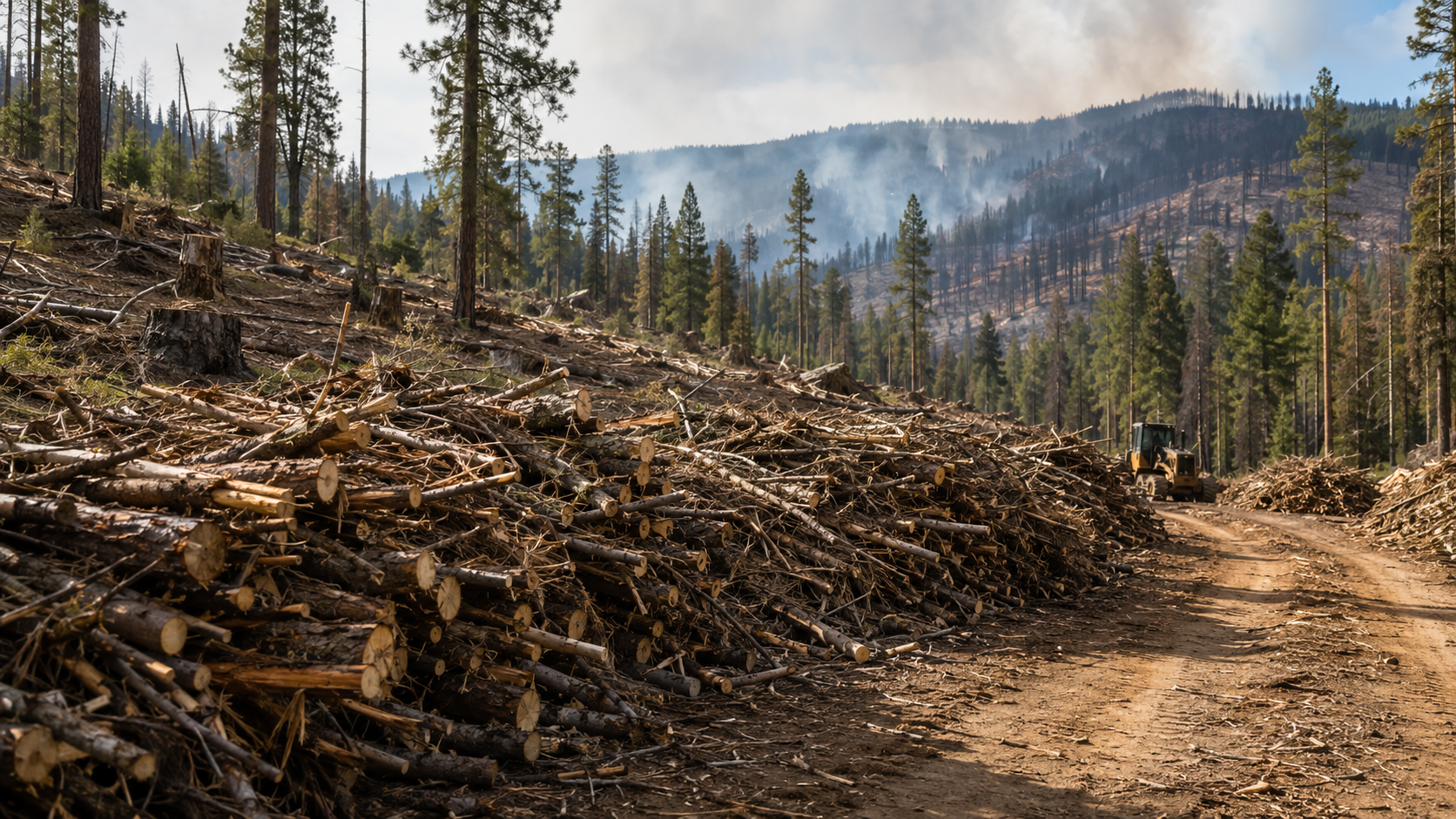
California has learned how to clear dangerous forest fuel. It hasn’t yet figured out where to put it. Now millions of tons of dead wood are piling up, turning wildfire prevention into deferred combustion. There’s a better solution, write Tracy Hernandez and Matt Dias.
<READ THE OP-ED >
THE LEAD: THE 73 PERCENT
Here's a number Sacramento might want to tape to the bathroom mirror: 73%. That's the share of likely California voters who told the Public Policy Institute of California they'd vote yes on a citizens' initiative amending CEQA to speed up review of housing, transportation, health, water and clean energy projects. Not 73% of developers. Not 73% of one party. Seventy-three percent of the people who actually show up in November. The same survey — 1,578 adults, fielded June 29 to July 6 — found a majority willing to ease land-use and environmental restrictions to get more housing built. If you've spent any time in a California hearing room, these findings read like dispatches from a parallel state. The strongest support anywhere in PPIC's survey, eight in ten, comes from renters and from likely voters earning under $40,000 a year. The people most often invoked as the reason we can't streamline anything are the ones asking loudest for it.
Leave it to Californians to complicate the picture. Seventy-five percent say AB 32, the state’s landmark 2006 climate law, has been mostly good for the state, 78% call climate change a serious threat to California's future, and 55% say stricter environmental rules are worth the cost. But 60% won't pay a dollar more for renewable electricity. Sixty-six percent oppose the 2035 gas-car ban, up seventeen points since 2021. And one in seven, asked to name the most important environmental issue facing California, answered: government overregulation. You could be forgiven for calling it a basket of contradictions. But the upshot remains the same: Californians agree on the destination. What's collapsing is support for the specific routes Sacramento picked.
🤫 Everything you should know
🏘️ THE ‘STICK’S SECOND ACT — Candlestick Park, once baseball’s frozen concrete punchline, is finally getting a second act. Developer Five Point plans to break ground in September on a 270-acre neighborhood with more than 7,200 homes, offices, shops and parks, starting with $130 million in infrastructure for 675 homes. The project has spent years being mugged by retail collapse, pandemic delays and a radioactive-cleanup scandal at nearby Hunters Point. Now San Francisco’s AI-fueled rebound, rising rents and southward-shifting office market have revived hopes. “I think this is Candlestick’s moment,” said Five Point executive Suheil Totah. The gamble remains hefty: condos are still sluggish, companies may resist moving five miles from downtown, and developers must spend fortunes before collecting a dime. Then there’s the weather. Demolishing the wind-amplifying stadium may help, but meteorologist Jan Null offered the civic equivalent of a cold shower: “It’s still going to be a cold, blustery place.” So, yes, bring layers. - Wall Street Journal
🤑 LABOR PAINS HIT PROP 40 — California labor is eating its own over Proposition 40, a one-time 5% tax on billionaires that would funnel 90% of the money into healthcare. The union behind it says federal cuts have created a looming catastrophe. Rival unions say the measure is a fiscal sugar rush: generous to hospitals, stingy to schools, public safety, child care and long-term stability. Even SEIU California, parent of the union pushing the tax, has gone neutral on the proposal. Many folks also hear “one-time” and see a subscription plan. They warn the levy could accelerate capital flight, force owners to sell illiquid assets, and turn private-company valuation into an accounting séance. GAAP book value is inconsistent, manipulable and wildly uneven across industries. “Sticking it to the billionaires” is a great populist rallying cry; the policy reality is more nuanced…and economically fraught. — LA Times
🤖 AI’LL SEE YOU OUT? — A cursory look at the news this week would indicate that the booming Bay Area’s latest growth sector is unemployment. Visa is cutting 2,600 jobs — more than 7% of its workforce — as it reorganizes product and technology teams around AI, efficiency and higher-growth businesses. Intel, Uber and Patreon are meanwhile eliminating more than 200 local positions. Intel is trimming 103 jobs despite rising revenue; Uber is cutting 41 while praising AI’s ability to scale customer support; Patreon is dropping 93 employees, or roughly 20% of staff, while insisting robots are not the reason. Taken together, the layoffs capture Silicon Valley’s current theology: invest lavishly in artificial intelligence, flatten the org chart, and describe the disappearing humans as strategic realignment. The machines may not be replacing everyone yet, but the canary in the coal mine is growing curiously quiet. — SF Chronicle
🎙️ 💬 🎧 - ON THE POD: Napa’s Hidden Story
Napa is more than a tasting room with excellent branding. Jeri Hansen, President and CEO of the Napa Chamber of Commerce and New California Coalition partner, joins Barrels and Roots to discuss the farmers, workers and entrepreneurs beneath the gloss, why preservation requires evolution, and how technology, healthcare and new ventures can keep the valley thriving after wine stops carrying the entire tab alone. — Barrels & Roots
🦖 — THE MUSEUM OF JURASSIC TECHNOLOGY

The Museum of Jurassic Technology is Los Angeles’s exquisitely deadpan cabinet of curiosities, where science, folklore, art and outright invention mingle under museum lighting and impeccable manners. Its exhibits may be true, false or gloriously beside the point. As AI comes for us all, it’s worth a visit, even if it leaves you delightfully unsure what, exactly, counts as knowledge anymore. - Museum of Jurassic Technology
🏃♂️ 💨 ✋ FAST FIVE
- 🏗️ Malibu and Pasadena fire victims get their density back. A YIMBY Law settlement restores SB 9 rights in both cities, meaning owners rebuilding after the 2025 fires can put up to four units on a lot — reversing executive orders that had let local governments switch the state law off. Rebuilding at the old density was always the expensive way to do this. — CalMatters
- 🏢 The corner office is now a one-bedroom. San Ramon may become the Bay Area's template for turning vacant office space into housing — the rare California crisis where two problems can be talked into canceling each other out. — SF Chronicle
- 🏙️ San Diego trades storefronts for stories. Several sites that housed well-known local businesses for decades are headed for high-rise housing — the kind of swap that produces genuine civic grief and several hundred homes. — San Diego Union-Tribune
- ⚖️ Sacramento comes for the CIPA hustlers. The legislative fix we flagged as stalled in June is moving — SB 690 amendments would kill private website “pen register” suits outright, retroactively, leaving enforcement to the AG. The committee called the current racket a "poster child for abusive lawsuits." It cleared the Senate 35-0. — Inside Privacy
- 📚 The Paradise Panthers come home. Nearly eight years after the Camp Fire erased Paradise Elementary, the Panthers have a campus again. The rebuilt school — largely funded by Measure Y — welcomed the community July 30 with a ribbon cutting and tours. More than 200 students return this fall. — Chico Enterprise Record
