
Nobody voted no
September 5, 2026
A bill to unlock condo construction passed both houses of the Legislature, drew zero opposing votes, and died anyway at the stroke of midnight Monday. Meanwhile, San Francisco offers a fascinating lesson in what happens when you make it faster and more straightforward for people to build things. (Spoiler: They build things!) Other things we’re covering: a precarious emergency drinking water fund, a LAHSA commissioner who was too good for his own…uh…good, and the sad state of student housing.
THE LEAD: IF YOU LET THEM, THEY WILL BUILD.
Let’s call it an “accidental controlled experiment.”
On a busy section of Geary Boulevard in San Francisco, a developer plans to transform the erstwhile Hong Kong Lounge II into exactly the kind of housing the city needs. The project would span eight stories and include 89 for-sale condos, 13 of them deed-restricted affordable, plus some retail and dash of stacked parking for good measure. Once the application is complete, the city is on a six-month clock to approve it.
Just two blocks away, a strikingly similar project at the defunct Coronet Theater took six years to fight its way through the City Hall bureaucracy. The fundamentals were all the same: same corridor, same neighborhood, same kind of building. The big difference is the rulebook. SF Mayor Daniel Lurie’s Family Zoning Plan, approved by the Board of Supervisors in December, simply legalized a category of housing on Geary, the main thoroughfare to the western neighborhoods. That’s it! Folks appear to have picked up the signal. Five more projects are queued up along the same street, all enjoying the warm waters of predictability that come with that six-month shot clock.
The new plan is only slated to yield about 14,600 new units over the next 20 years, according to the City’s chief economist, which is a far cry from the 82,000 mandated by the state. Still, we’ve found a recipe that works: Speed things up and make them predictable! It's time to scale that approach in new and creative ways.
🤫 Everything you should know
🏘️ - NOBODY VOTED NO — Construction defect litigation might not be the sexiest topic under the sun, but when it comes to the housing crisis, it plays an important role. Nowhere is it more consequential than with respect to condominiums, which occupy an affordable sweet spot between the single-family homes built for buyers and the apartments built for renters. For many generations of Californians, a condo was their entry point into the housing market. Sadly, the humble condo has essentially been sued out of existence in California. Dan Dunmoyer of the California Building Industry Association makes the case clear: every one of their condo projects gets sued for defect, so they don't build condos. Makes sense!
Enter Assembly Bill 1903, which would have reworked how construction-defect disputes get resolved. Builders have spent the last 20 years calling for this type of reform, which would ostensibly reopen the floodgates of condo development. The bill passed the Assembly last week. It cleared the Senate on Monday night at 11:15 with no objection. Things were looking good, but hopefully nobody popped any champagne. The bill needed one more procedural vote back in the Assembly to lock in the amendments before it could head to the governor’s desk, but the vote never happened. The curtain dropped on the two-year legislative session at midnight and the bill turned into the proverbial pumpkin, having never faced a single no vote in either chamber. CalMatters went on a hunt to figure out who let the clock run out. — CalMatters
🏚️ - LAHSA WATCHDOG SMACKED WITH ROLLED-UP NEWSPAPER — Justin Szlasa distinguished himself on the Los Angeles Homeless Services Authority commission by driving out to see things for himself. Ahead of a vote to renew a contract for an approved camping site, he went to the parking lot himself and counted. What do you know? LAHSA had spent more than a year paying for twice as many spots as physically existed. A judge later called it obvious fraud. Szlasa also turned up more than 250 taxpayer-funded, master-leasing apartments sitting empty, about a third of the total, and spent months asking LAHSA management for a basic accounting of where money was going.
If this has you thinking, “Hey, that guy’s crushing it! Let’s give him more responsibility!” Prepare to be sorely disappointed.
Last week Szlasa was removed as chair of LAHSA's audit committee without a reason given. The request came from Stephanie Graves, the commission's new chair and an appointee of Mayor Bass, who told LAist it was her prerogative. Szlasa asked to keep the job and was turned down, again without explanation. It would be a tough enough pill to swallow if LAHSA hadn’t been drawing scrutiny for a rash of poor fiscal decisions recently. But here we are. LAHSA has spent the year asking Sacramento and Washington to trust it with money, and just took away the gavel from the one commissioner in the habit of checking. — LAist
💧 - CLIFF-HANGING MOMENTS — And now for some good news, delivered at gunpoint. The Safe and Affordable Fund for Equity and Resilience, (SAFER) which pays for emergency water when a town's wells fail and funds the permanent fixes afterward, was in dire straits just a few months ago, staring down the barrel of a 50% cut in funding. On Tuesday, the Legislature restored the funding, sending the governor a $171 million package, $71 million from greenhouse gas allowances and $100 million from the Prop 4 bond. It was a big win served up by a coalition of organizations that agree on almost nothing else.
Now the fine print. Prop 4 money can’t legally be spent on emergency response. Last we checked, running out of drinking water is pretty much an emergency, thus SAFER. Case in point: This summer two wells failed in the Central Valley town of Earlimart, leaving 8,000 people without reliable water for a month. Prop 4 dollars could not have bought them a single bottle of the wet stuff.
It’s a widespread problem. Statewide, there are still 1,052 failing or at-risk water systems. Meanwhile, state drinking water grants are projected to fall by 79% while federal funding is expected to shrink by 84% in 2027-2028. “We are entering some scary times in our ability to address these problems,” said Denise England, Tulare County Resources and Grants Manager. Tom Collishaw, CEO of Visalia nonprofit Self-Help Enterprises, put a finer point on it: “We are getting down to the cliff-hanging moments every year.”
Editor’s note: Clean drinking water in the fourth-largest economy on the planet should not be an annual coin flip. — SJV Water
🎙️ 💬 🎧 - ON THE POD: VOICES OF ESALEN
Few California institutions have turned self-discovery into a cultural export quite like Esalen, Big Sur’s cliffside laboratory for seekers, thinkers and, famously, Don Draper. Voices of Esalen opens that famously eccentric world to everyone else, offering a listen inside the place where California learned to make introspection feel recreational, even fashionable. — Voices of Esalen
🫨🚶🏿🫨 - TAKE AN EARTHQUAKE WALK
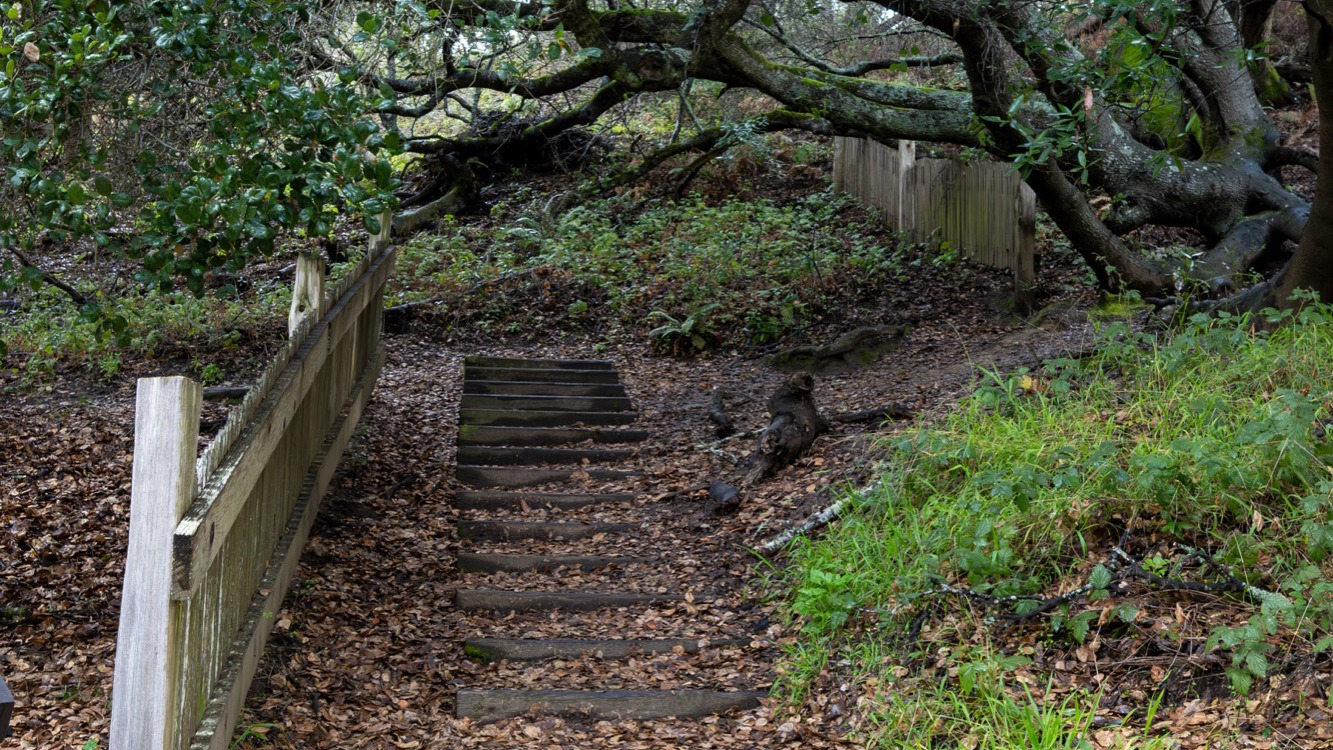
Photo credit: Adobe Stock: AlessandraRC
If you’re looking for a picturesque and peculiar short walk in Northern California, welcome to the Point Reyes National Seashore’s Earthquake Trail, six-tenths of a paved mile winding through meadows and alders past interpretive signs detailing the long, grinding disagreement between the North American and Pacific tectonic plates. Halfway down the trail you meet a fence that seemingly gives up on being a fence and then changes its mind sixteen feet to the left. That gap opened in less than one minute in 1906, the same temblor that leveled San Francisco. It’s a lovely walk, there’s a picnic area, and the plates are still jockeying for position. — National Park Service
🏃♂️ 💨 ✋ FAST FIVE
1. 📰 A newsroom bill lands on Newsom's desk. Legislation to support California news organizations has cleared the Legislature and now awaits the governor's signature. If enacted, eligible news orgs could score sweet, sweet tax credits for hiring journos.
— LA Times
2. 🔋 The lithium is real. The water plan is in question. An appeals court found Imperial County never showed the Hell's Kitchen project has enough Colorado River water for its full lifespan, stranding one of the world's largest lithium deposits under a county with 17.6% unemployment. Settle the water question for the whole valley and the projects will follow.
— Capital & Main
3. 🛠️ 100,000 new union members. California unions grew to 16.7% of the represented workforce in 2025, but half the bargaining units formed in 2024 still hadn't ratified a first contract by this spring. Winning the election turns out to be the easy part.
— UCLA Newsroom
4.🔥 Wildfire deal collapses in the Assembly. Legislators abruptly shelved a wildfire liability compromise Tuesday, with Speaker Robert Rivas saying the proposal fell short of resolving who should pay when utilities spark fires.
— POLITICO
5. 🎒 More California students have nowhere to sleep. A UCLA analysis finds student homelessness climbing across the state. It’s hard to study for mid-terms when you don’t know where you’re going to sleep at night.
— UCLA Newsroom
